
Read these three (maybe four) articles and all will be revealed…

Everyone,
I’ve had a number of recent emails about people feeling shocks from their RVs and appliances. While electic shocks were common with appliances, tube radios and musician stage amplifiers in the ‘50s and ‘60s, modern wiring practices make electric shocks highly unlikely.
Back in the day….

Non-polarized outlets were common and many tube radios didn’t have a power transformer. So there was no chassis isolation from the hot conductor. Flipping the power plug resulted in the metal chassis being directly connected to the incoming hot conductor. That was a guaranteed shock and possible death by electrocution if you touched the chassis and anything grounded simultaneously
Here’s the schematic of how guitar amplifiers were wired with a 3-way ground switch to reduce hums and shocks. We called that ground capacitor a “widow maker” if it shorted out. Yes, getting shocked while playing your guitar through a stage amplifier was common in the ‘50s and ‘60s. Been there, done that…

From the beginning
I assume many of my daily newsletter subscribers have already read my articles on detecting hot-skin voltage using a Non-Contact Voltage Tester (NCVT). If so, proceed with Part 1 below. If not, then time for review HERE.
#1) My Latest Hot-Skin Voltage Epiphany
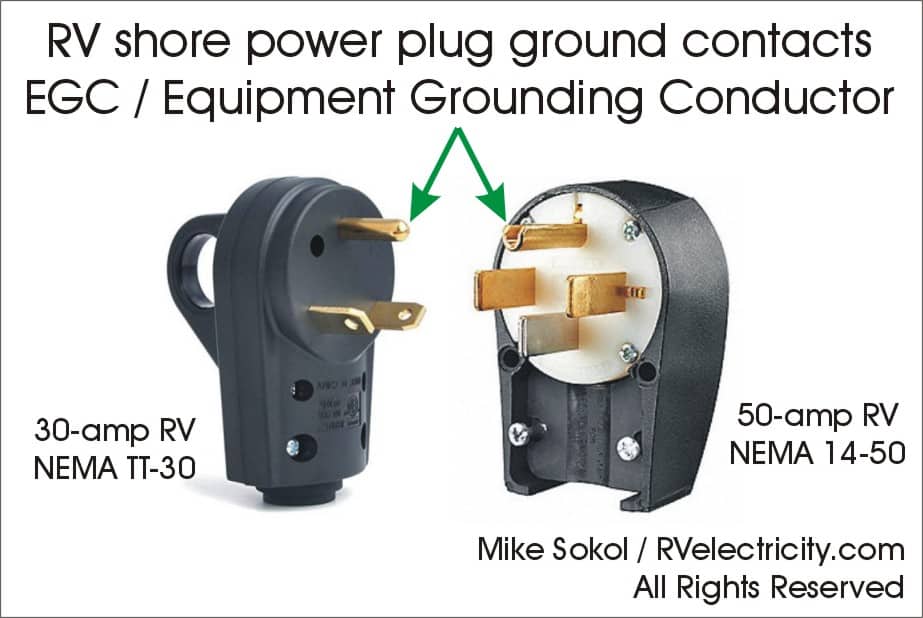
Here’s my latest article detailing how swapped ground/neutral conductors in an RV interior electrical outlet can become a hot-skin fault current source. So if there’s an interior outlet in your RV that works sometimes (and a 3-light outlet tester says it’s okay, but not at other times (with a strange 3-light outlet tester reading), that’s a hint that there’s an RNG (Reversed Neutral Ground) in that outlet which can create a deadly hot-skin voltage on your RV if your shore power hookup has a lost ground connection. Read it HERE.
#2) What About Other Ground Fault Currents?
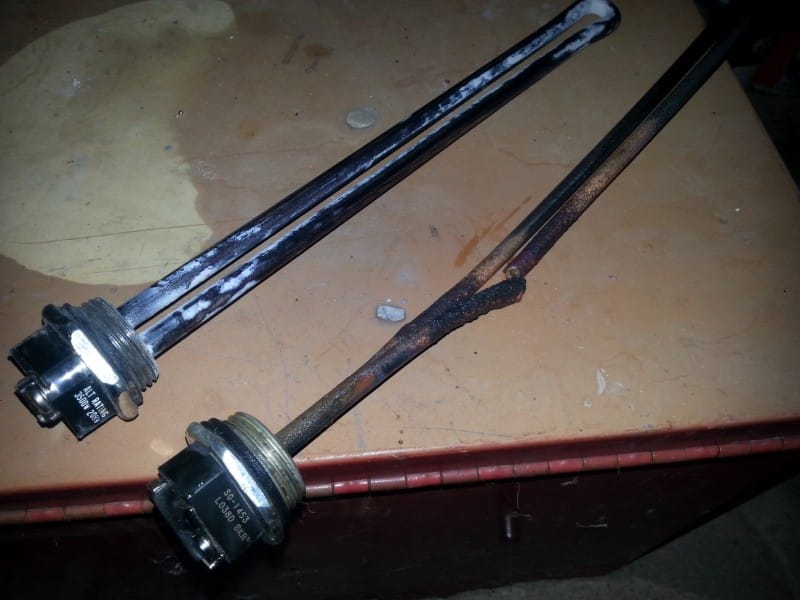
Here’s a variety of low, medium and high-current faults that can turn onto a hot-skin voltage if there’s a missing ground connection.
Note that low-current ground faults are quite normal in an RV, so there might not be anything else wrong besides a broken EGC ground connection. Most RVs will leak at least a few mA of current to chassis ground simply due to RF line-to-ground filter capacitors in the converter/charger. This usually ends up creating a hot-skin around 60 volts with just a few mA of potential fault current. So not deadly, but definitely a shock. And if something else goes wrong, then it can create enough fault current to kill you. Read it HERE.
#3) Troubleshooting RV Hot-Skin Voltage
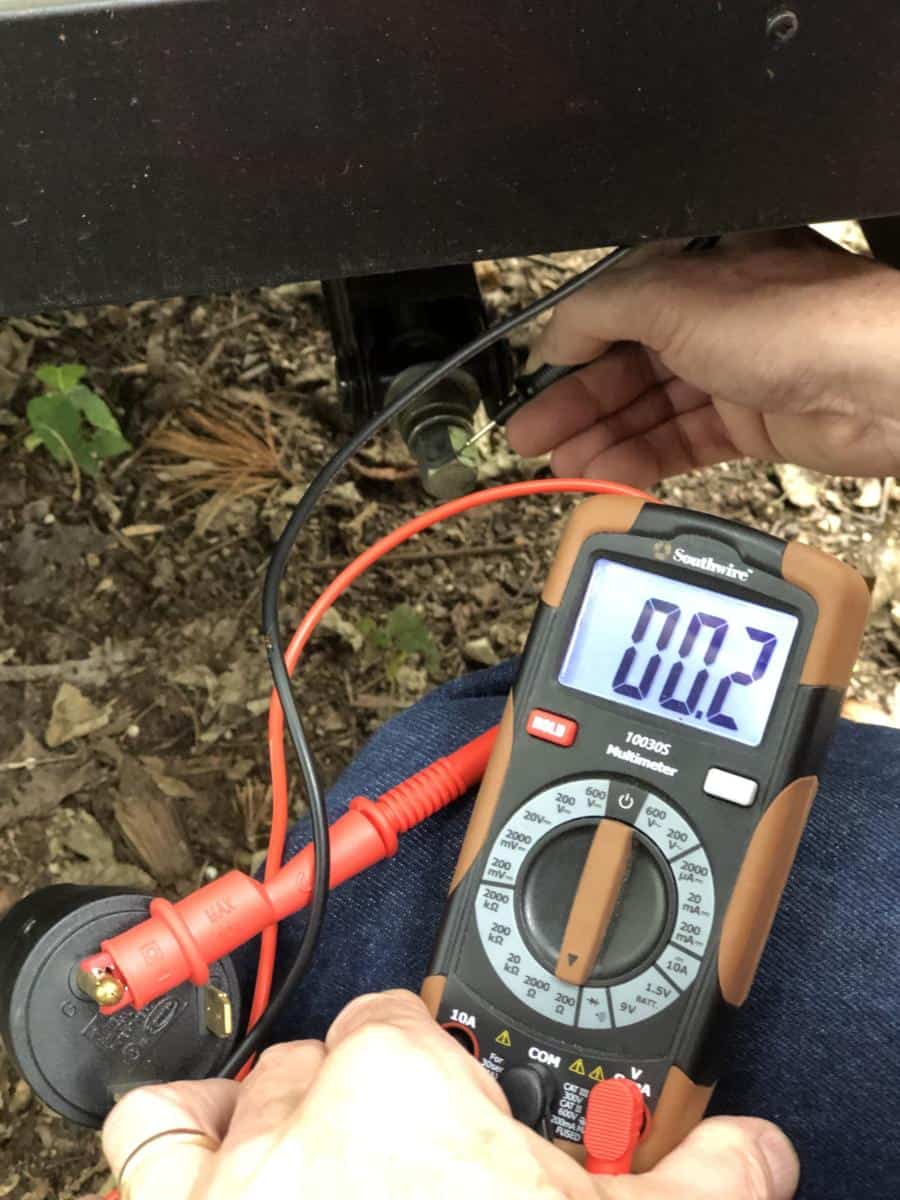
There’s a few basic rules about how and when a hot-skin voltage on an RV can occur. Without understanding these rules you (or your electrician) can easily go on a wild goose chase at $150 per hour. I’ve been troubleshooting hot-chassis (skin) conditions on all kinds of industrial and sound stage gear for 50 years, so I’ve posited a bunch of theories and learned a few tricks.
This is my in-depth article on advanced test procedures for RV hot-skin troubleshooting. Read all about it HERE.
Please review the above articles and comment with any questions.
Let’s play safe out there… Mike Sokol
